Today, you feel more…
What is a disciple?
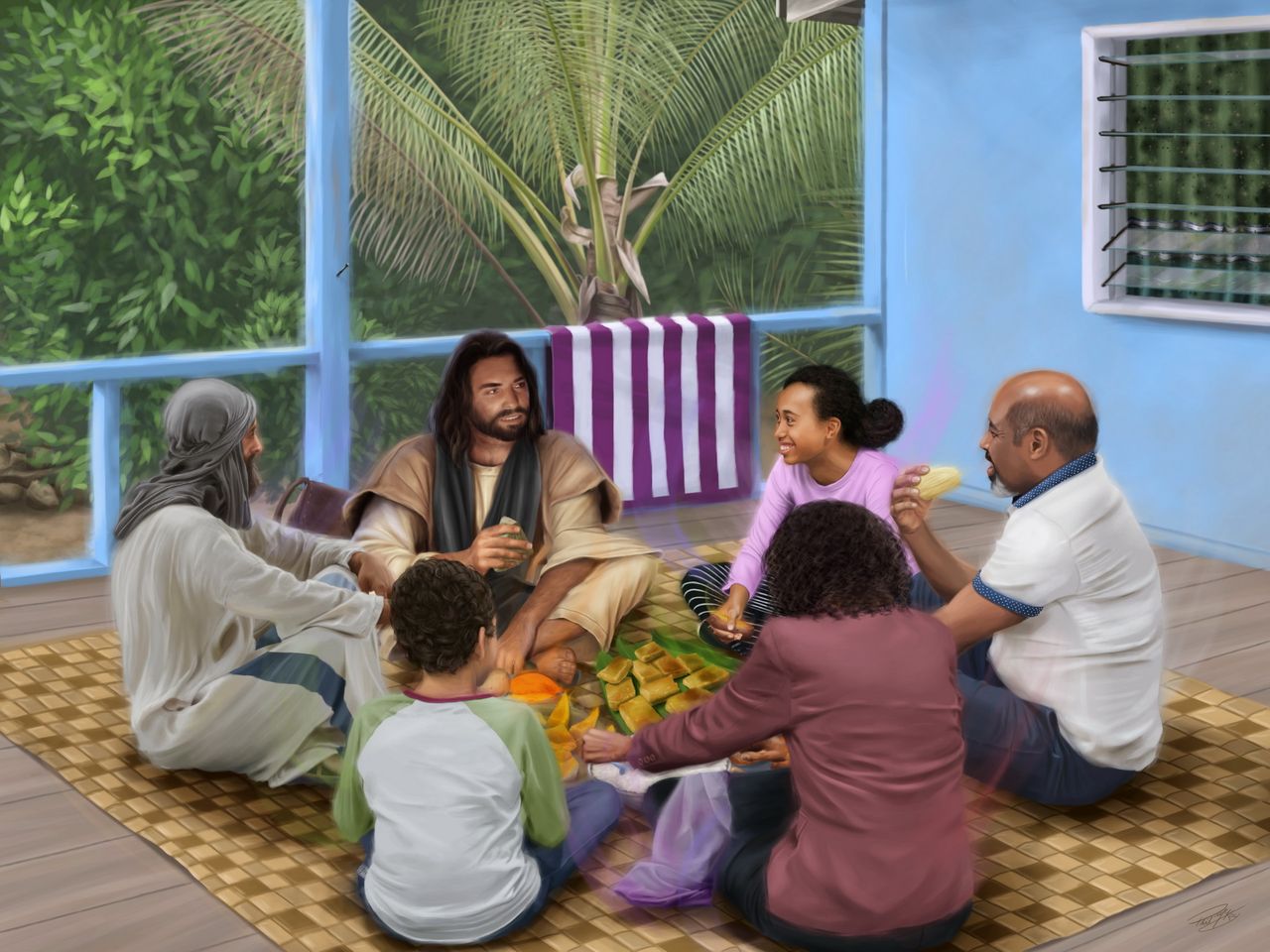
Not an expert. Not someone who has it all figured out. A disciple is an apprentice of Jesus: someone learning, little by little, to live as He would live in your place — in your class, your home, your friendships. And before even being an apprentice, you are loved.
Member… or disciple?
Being a member of a church and being a disciple of Jesus are not the same thing: you can be one without the other. This is neither a grade nor a judgment — just an honest mirror to see where you are and where to grow next. Answer honestly: no one but you sees this result.

Faith is sturdier than it looks
In the Bible, the word we translate "faith" (Greek pistis, Hebrew emunah) doesn't mean "a feeling," or "being 100% sure." It means faithfulness, firmness, trust — the same family as the word "amen": it's solid, you can lean on it.
Nor is it only believing ideas in your head. The Bible says it plainly:
Believing isn't ticking boxes. It's putting your weight on Someone reliable. And here's what holds you up on doubting days: your faith doesn't rest on the strength of your faith, but on God's faithfulness — and He is faithful first, before you.
It grows by listening (Romans 10:17), takes Jesus as its model (Hebrews 12:2), and shows in small acts of love (Galatians 5:6). Small or great, what matters isn't its size — it's who it leans on.
A small faith is already a faith
You believe slowly? In fits and starts? That's normal, and it's enough to begin. Jesus never asked for a great faith — just a living one, even as small as a tiny seed (Mark 4:31-32).
You don't grow by clenching. You grow by receiving.
You have the right to doubt
Doubt is not the opposite of faith. You can believe and doubt at the same time. A father cried out to Jesus a sentence you can make your own:
Jesus didn't turn him away. He helped him. Carry your questions, don't hide them.
You have nothing to prove — and you can be sure
God doesn't love you more when you succeed, nor less when you fail. His love comes before anything you could do (1 John 4:19).
Assurance doesn't rest on how you feel today, but on His promise.
Following — grace is free, never cheap
Receiving is not standing still. When Jesus called His first disciples, He said: "Follow me" — and something started moving. Grace can't be bought: it's free. But it loves you too much to leave you where you are. Following is answering a love, not settling a bill.
Slowly, but in the same direction
Believing slowly is not a delay to catch up on. A life with God is a long patient walk in the same direction — not a flare-up. The days without momentum count as much as the days of fervor. Faithfulness isn't intensity — it's keeping on.
Not on your own
You don't become a disciple in a corner. Faith grows better alongside others — even imperfect ones. You need them, and — you may not believe it yet — they need you.
What if I fall?
You will fall — we all do. The good news: falling doesn't end the journey, it's part of it. Peter denied Jesus three times; Jesus didn't cross him out, He lifted him with a single question: "do you love me?" (John 21).
Don't hide when you fall — come back. Shame says "run away"; grace says "come closer." Rising seven times is better than never having fallen.
1 & 2 Corinthians
Every week, your church reads one of these letters. They're not boring lessons: they're burning mail, written to a young, messy, beloved church — like us. Open a card. See if it speaks to you.
Getting into the Bible — without getting lost
If you're opening the Bible for the first time, feeling lost is normal. Here's what you need to find your way — nothing to memorise.
What it is
Not one book, but a library — 66 books written across centuries by dozens of authors. And yet one story: a God who comes looking for people, and who, from beginning to end, points to Jesus.
Two main parts
The Old Testament — before Jesus: creation, a people, and the promise of a Saviour. The New Testament — Jesus, then the first Church: the promise kept.
How to find a verse
A reference like John 3:16 reads: book John, chapter 3, verse 16. The table of contents at the front gives you the page for each book. That's the whole code.
Where to start
To meet Jesus, open a gospel — Mark (short and vivid) or John (more inward). When it hurts, go to the Psalms: someone there has already put words to what you feel. Read a little, but read for real.
Three questions for every reading
Facing a passage, simply ask: what does it show me about God? about me? what do I do with it today? Then talk to God in your own words. It isn't an exam — it's a meeting.
Orientation drawn from the Personal Ministries introduction to the Bible (North American Division, module Introduction to the Bible).
Very small steps — if you want
Not orders. Invitations. Take just one, the one that speaks to you today:
- Talk to God in your own words — even "I don't know what to say" is a prayer.
- Read a chapter of 1 Corinthians 13 — the portrait of love. Put your name where the word "love" is.
- Receive the Sabbath as a gift, not a rule: a day to breathe and let yourself be loved.
- Ask one honest question to someone you trust, or join a small group.
"He who began a good work in you will bring it to completion" (Philippians 1:6).